
| Matt Johnson Outdoors The Quest for Chequamegon Bay Bronzebacks |
| Matt Johnson Outdoors |
By: Jim Hudson
When I hear people talk about
fishing for smallmouth bass, I can
almost bet they will bring up the
opportunity awaiting a bass fanatic
here on my home water of
Chequamegon Bay. And when
they pop the question… “Is the
smallmouth fishing really that good
on Lake Superior?” Where after I
tell them the answer, I can
immediately see them start to
ponder to themselves, “How fast
can I make it up there?”. Already
wanting to lay their hands on one
of the many world class
smallmouths this fishery has to
offer.
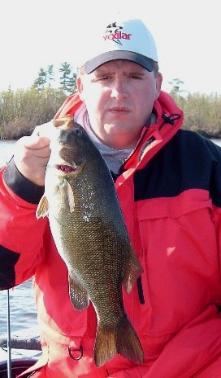
Located on the far southwest side of Lake Superior,
Chequamegon Bay is known as a premier location for the
bass enthusiast, but not all know the opportunities that await
them when it comes to fishing these heavyweights of the
smallmouth world on a year round basis. Be it spring, summer,
fall, or winter these fish will always be willing to give you a
fight of your life. The fight in these huge open water smallies
is not explainable, it just has to be experienced for one to
know. Not everywhere do you find a body of water that has a
22 inch minimum size limit for smallmouths and where you will
be tangling with fish that will average 17 to 18 inches but look
enormously bigger because of how fat they are.
Most people embark on their quest during the spring months,
where fishing is regulated as catch and release only starting
with the opener of the Wisconsin hook and line season where
catch and release applies to these fish until mid-June. At this
time, anglers from across the nation set out to fish the
thousands of smallmouths that make their annual spawning
migration into the shallow waters of the Sand Cut and the
Kakagon Slough. Starting at the end of April, these fish will
start to move into the shallows, and as the season opens,
people will be able to catch a number of fish each day, but
fishing is usually at its best by mid-May and into June. During
this time, an angler can almost bet he or she will run into pre-
spawn, spawning, and post-spawn fish where one can
incorporate all types of techniques to entice one of the many
bass into the boat. The mainstay for lures will run the gauntlet
through your tackle box and your rod selection, letting you
choose from: jerk baits, tubes, worms, spinner baits, top
water, bass poppers and streamers for the fly fisherman, live
bait, and the list goes on and on. Huge catch numbers are
seen during this time of year along with huge numbers of
other anglers but one can always find a spot out of the way of
other anglers to find a few fish. Then as June ends and July
begins, fishing will start to taper off in these areas and we
start to see fish showing up on different structural elements
found throughout the bay.
As the water temperature rises into the summer period, a
person will not have to look very far to find these now hungry
fish. At first glance, a novice to Chequamegon could be
overwhelmed by the enormous amount of water, but he or she
just needs to arm themselves with a quality map to locate
many of the obvious structural elements that will hold fish
throughout the summer. By searching rock piles, main lake
humps, drop-offs, weed beds, wood, and shoreline cover a
person shouldn’t have any problem catching a few smallies.
And just like the spring season, a person can employ a wide
range of techniques to get bit. Arm yourself with the right
presentation for the structure and depth you will be fishing
and watch as these brutes take you airborne time and time
again. You can’t go wrong with fishing crankbaits, a jig and
twister tail combination, a wide array of plastic presentations,
and or a live bait presentation. One thing is for sure during
this time of year, the fish will be hungry and will fight you tooth
or nail for your lure. So hold on!
So after battling these bruiser smallmouths throughout the
spring and summer, what’s next you ask? It’s trophy bass time
people! Fall fishing is what I would consider the best time for a
person to lay their hands on a real trophy fish out of
Chequamegon. Now don’t get me wrong, anytime of the year
these fish will be big, but after all the time they spend gorging
themselves on the abundant amount of prey this lake has to
offer them, these fish will be at their prime in the fall. As the air
and water temperatures start to decrease, the fish will start to
move off into deeper water nearby the structure you found
them in the summer. But don’t overlook taking a few casts into
the structure, as a few of these pigs still might be wandering
around looking for a meal. And in the fall, on those prime
fishing days, big baits can’t be beat for landing these bass,
but if the weather turns to the worse, a person might have to
finesse the fish into taking a presentation. Typical fall bait
choices would be large suspending crankbaits, large plastic
swimbaits, jigs tipped with big sucker minnows, along with a
wide array of other bait choices we have at our disposal. And
when the weather turns cool and nasty, down size your
presentations or move to live bait techniques. So don’t rule
out Chequamegon for early or late fall bass action, as you
never know when you will hook into one of those smallies that
all bass fisherman dream about.
And as the weather turns colder and you start to re-live the
many battles you had with these bronze beasts throughout the
year, ice begins to form across this great stretch of water and
quickly the hard water season is upon us. Throughout this
late fall season and into the winter season, we will see
another huge movement in these fish. Where schools upon
schools move to wintering areas, calling these spots home
again until the ice leaves and they make their journey back to
their spawning grounds. So break out the ice equipment, as
we have another chance to search out these smallies that call
Chequamegon home. And for the ice angler, this should peak
your interest, as there is not many places you can travel to
have a chance at icing smallmouth bass on a consistent
basis. For the ice season, a person can start their search in
and around the Ashland area, concentrating on depths from
18 to 25 feet on sandy bottoms where staying mobile is key to
catching multiple fish. An angler wanting to catch these fish
should be willing to cut multiple holes and jump hole to hole
searching out the active fish. Along with being mobile, being
armed with quality electronics such as a flasher, an angler will
be able to target these fish with more consistency. For baits,
jigging spoons and horizontal type jigs top the list for preferred
presentations. But just as any fish through the ice, these
smallies can become finicky and you may need to add a
minnow head to the treble of your spoon, some type of plastic
or wax worms to your jig, or switch to a lively lake shiner on a
jig or plain hook giving you just enough edge to lure these
pesky smallies into giving you the fight you crave. This time of
the year will not always produce a lot of fish caught, but still it
is another opportunity for a bass fanatic to get their fill on
these big Chequamegon Bay bronzebacks.
And as winter wears on, we will see the season close during
the first part of March. Where I again get to talk to many
individuals about the smallies that roam Chequamegon Bay,
sharing my recollections of years past, where then they will be
able to begin their “Quest for Chequamegon Bay
Bronzebacks”.
Jim Hudson
Owner and Operator of “Hudson’s On The Spot Guide
Service”
www.fishchequamegonbay.com
When I hear people talk about
fishing for smallmouth bass, I can
almost bet they will bring up the
opportunity awaiting a bass fanatic
here on my home water of
Chequamegon Bay. And when
they pop the question… “Is the
smallmouth fishing really that good
on Lake Superior?” Where after I
tell them the answer, I can
immediately see them start to
ponder to themselves, “How fast
can I make it up there?”. Already
wanting to lay their hands on one
of the many world class
smallmouths this fishery has to
offer.
Located on the far southwest side of Lake Superior,
Chequamegon Bay is known as a premier location for the
bass enthusiast, but not all know the opportunities that await
them when it comes to fishing these heavyweights of the
smallmouth world on a year round basis. Be it spring, summer,
fall, or winter these fish will always be willing to give you a
fight of your life. The fight in these huge open water smallies
is not explainable, it just has to be experienced for one to
know. Not everywhere do you find a body of water that has a
22 inch minimum size limit for smallmouths and where you will
be tangling with fish that will average 17 to 18 inches but look
enormously bigger because of how fat they are.
Most people embark on their quest during the spring months,
where fishing is regulated as catch and release only starting
with the opener of the Wisconsin hook and line season where
catch and release applies to these fish until mid-June. At this
time, anglers from across the nation set out to fish the
thousands of smallmouths that make their annual spawning
migration into the shallow waters of the Sand Cut and the
Kakagon Slough. Starting at the end of April, these fish will
start to move into the shallows, and as the season opens,
people will be able to catch a number of fish each day, but
fishing is usually at its best by mid-May and into June. During
this time, an angler can almost bet he or she will run into pre-
spawn, spawning, and post-spawn fish where one can
incorporate all types of techniques to entice one of the many
bass into the boat. The mainstay for lures will run the gauntlet
through your tackle box and your rod selection, letting you
choose from: jerk baits, tubes, worms, spinner baits, top
water, bass poppers and streamers for the fly fisherman, live
bait, and the list goes on and on. Huge catch numbers are
seen during this time of year along with huge numbers of
other anglers but one can always find a spot out of the way of
other anglers to find a few fish. Then as June ends and July
begins, fishing will start to taper off in these areas and we
start to see fish showing up on different structural elements
found throughout the bay.
As the water temperature rises into the summer period, a
person will not have to look very far to find these now hungry
fish. At first glance, a novice to Chequamegon could be
overwhelmed by the enormous amount of water, but he or she
just needs to arm themselves with a quality map to locate
many of the obvious structural elements that will hold fish
throughout the summer. By searching rock piles, main lake
humps, drop-offs, weed beds, wood, and shoreline cover a
person shouldn’t have any problem catching a few smallies.
And just like the spring season, a person can employ a wide
range of techniques to get bit. Arm yourself with the right
presentation for the structure and depth you will be fishing
and watch as these brutes take you airborne time and time
again. You can’t go wrong with fishing crankbaits, a jig and
twister tail combination, a wide array of plastic presentations,
and or a live bait presentation. One thing is for sure during
this time of year, the fish will be hungry and will fight you tooth
or nail for your lure. So hold on!
So after battling these bruiser smallmouths throughout the
spring and summer, what’s next you ask? It’s trophy bass time
people! Fall fishing is what I would consider the best time for a
person to lay their hands on a real trophy fish out of
Chequamegon. Now don’t get me wrong, anytime of the year
these fish will be big, but after all the time they spend gorging
themselves on the abundant amount of prey this lake has to
offer them, these fish will be at their prime in the fall. As the air
and water temperatures start to decrease, the fish will start to
move off into deeper water nearby the structure you found
them in the summer. But don’t overlook taking a few casts into
the structure, as a few of these pigs still might be wandering
around looking for a meal. And in the fall, on those prime
fishing days, big baits can’t be beat for landing these bass,
but if the weather turns to the worse, a person might have to
finesse the fish into taking a presentation. Typical fall bait
choices would be large suspending crankbaits, large plastic
swimbaits, jigs tipped with big sucker minnows, along with a
wide array of other bait choices we have at our disposal. And
when the weather turns cool and nasty, down size your
presentations or move to live bait techniques. So don’t rule
out Chequamegon for early or late fall bass action, as you
never know when you will hook into one of those smallies that
all bass fisherman dream about.
And as the weather turns colder and you start to re-live the
many battles you had with these bronze beasts throughout the
year, ice begins to form across this great stretch of water and
quickly the hard water season is upon us. Throughout this
late fall season and into the winter season, we will see
another huge movement in these fish. Where schools upon
schools move to wintering areas, calling these spots home
again until the ice leaves and they make their journey back to
their spawning grounds. So break out the ice equipment, as
we have another chance to search out these smallies that call
Chequamegon home. And for the ice angler, this should peak
your interest, as there is not many places you can travel to
have a chance at icing smallmouth bass on a consistent
basis. For the ice season, a person can start their search in
and around the Ashland area, concentrating on depths from
18 to 25 feet on sandy bottoms where staying mobile is key to
catching multiple fish. An angler wanting to catch these fish
should be willing to cut multiple holes and jump hole to hole
searching out the active fish. Along with being mobile, being
armed with quality electronics such as a flasher, an angler will
be able to target these fish with more consistency. For baits,
jigging spoons and horizontal type jigs top the list for preferred
presentations. But just as any fish through the ice, these
smallies can become finicky and you may need to add a
minnow head to the treble of your spoon, some type of plastic
or wax worms to your jig, or switch to a lively lake shiner on a
jig or plain hook giving you just enough edge to lure these
pesky smallies into giving you the fight you crave. This time of
the year will not always produce a lot of fish caught, but still it
is another opportunity for a bass fanatic to get their fill on
these big Chequamegon Bay bronzebacks.
And as winter wears on, we will see the season close during
the first part of March. Where I again get to talk to many
individuals about the smallies that roam Chequamegon Bay,
sharing my recollections of years past, where then they will be
able to begin their “Quest for Chequamegon Bay
Bronzebacks”.
Jim Hudson
Owner and Operator of “Hudson’s On The Spot Guide
Service”
www.fishchequamegonbay.com
 |
| |
 |
| |
 |
| |
 |
| |
 |
| |
 |
| |
 |
| |
 |
| |
 |
| |
 |
| |
 |
| |
 |
| |
 |